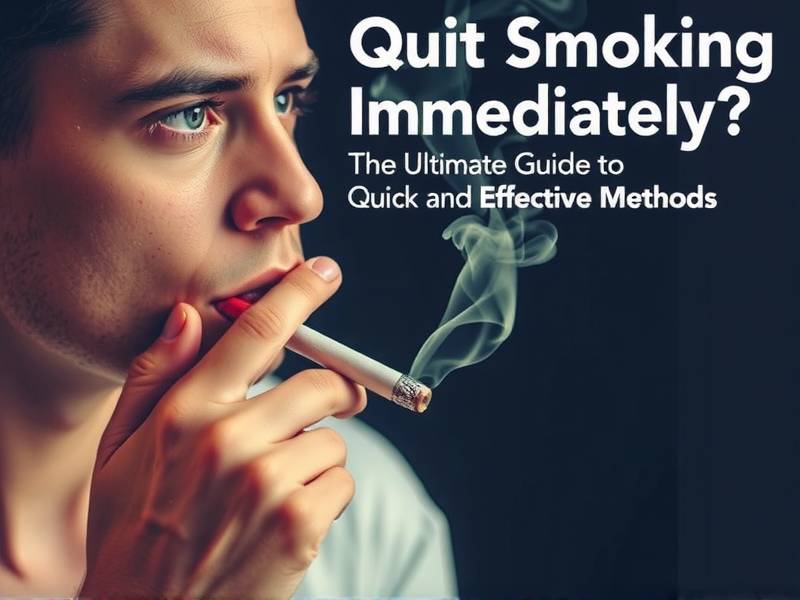
Can You Quit Smoking Immediately? The Ultimate Guide to Quick and Effective Methods
Introduction: The Quest for Instant Freedom
The thought of quitting smoking has crossed the minds of millions around the globe. For some, the desire is immediate—no more cigarettes, no more cravings. But can you quit smoking immediately? This guide delves into the feasibility and effectiveness of quick smoking cessation methods.
Understanding Immediate Quitting
What Does "Immediate" Mean?
When we talk about quitting smoking immediately, it typically refers to stopping abruptly without a gradual reduction in cigarette consumption. This approach is often driven by a sense of urgency or a pivotal moment that motivates smokers to make a clean break.
The Science Behind Immediate Quitting
The idea behind immediate quitting is based on the belief that sudden cessation can shock the body into reducing withdrawal symptoms more quickly than a gradual approach. However, it's essential to understand that everyone's experience is unique.

Quick Smoking Cessation Methods: What Works?
Nicotine Replacement Therapy (NRT)
NRT is one of the most popular methods for quick smoking cessation. It includes patches, gum, lozenges, inhalers, and nasal sprays that deliver controlled amounts of nicotine to reduce withdrawal symptoms.
Pros:
- Provides a steady supply of nicotine.
- Helps reduce withdrawal symptoms.
Cons:
- Can lead to dependency on NRT.
- May not address non-nicotine cravings.
Prescription Medications
Several prescription medications are available for those looking to quit smoking immediately. These include bupropion (Zyban) and varenicline (Chantix), which work by altering the brain's chemistry related to nicotine addiction.
Pros:
- Can be highly effective when combined with behavioral support.
- Helps reduce withdrawal symptoms and cravings.
Cons:
- Requires a prescription from a healthcare professional.
- May have side effects.
Behavioral Techniques
Behavioral techniques focus on changing your smoking habits and addressing psychological factors that contribute to smoking. This includes cognitive-behavioral therapy (CBT), mindfulness meditation, and hypnotherapy.
Pros:
- No side effects.
- Can provide long-term behavioral changes.
Cons:
- Requires commitment and discipline.
- May not be as effective as medication for some individuals.
The Importance of Support
No matter which method you choose, having support is crucial. This can come from friends, family, support groups, or professional counseling. The more support you have, the better your chances of success.
Common Challenges and How to Overcome Them
Withdrawal Symptoms
Common symptoms include irritability, anxiety, depression, headaches, and increased appetite. While these can be challenging, they typically peak within a few days or weeks and then begin to subside over time.
Triggers
Identifying and avoiding triggers can help prevent relapse. Triggers might include social situations or stressors that previously prompted you to smoke.
Conclusion: Is Immediate Quitting Possible?
Quitting smoking immediately is possible for many people but requires determination, support, and an understanding that it's a journey with potential challenges along the way. Whether you opt for medication, behavioral techniques, or a combination of both, remember that each step towards quitting is progress in itself.